01
Assess
Inventory, locations, timing, requirements, and the outcome your team needs.
 Request a recovery review
How It Works
Galide moves retired technology from uncertainty to a documented outcome through one accountable recovery path.
The operating problem
It is the absence of a clear next step—and a clear record of the outcome.
Retired devices accumulate in storage rooms, refresh backlogs, offices being closed, and distributed locations. While they wait, recovery potential changes and unanswered questions stay open.
One connected process gives each device a route, each exception an owner, and each project a closeout the responsible teams can use.
01
Inventory, locations, timing, requirements, and the outcome your team needs.
02
Devices enter the agreed handling process and data-erasure route.
03
Condition, recovery readiness, and the appropriate next outcome are reviewed.
04
Device-level records, exceptions, recovery outcomes, and settlement close the work.
The accountable path
Thread, trace, and next step remain connected from the first inventory review through final reporting.
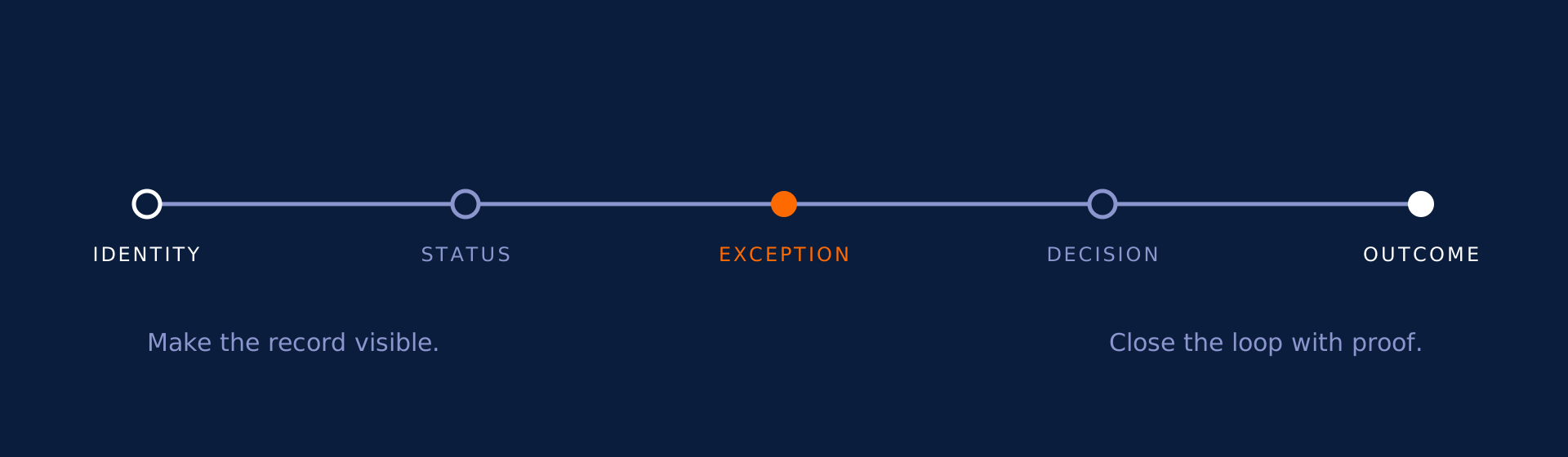
Galide reviews device types, quantities, locations, condition, timing, intended outcomes, and reporting needs. An asset list helps, but it does not need to be complete to begin.
Output: scoped route and information requirements
Devices enter the agreed handling process. Receipt, movement, data erasure, and exceptions are recorded against the project workflow.
Output: receipt and Chain-of-Custody Record
Condition and recovery readiness are reviewed. Eligible devices move to redeployment, repair, refurbishment, resale, or another approved recovery outcome.
Output: serialized condition and outcome record
The project closes with records that connect inventory, erasure, condition, exceptions, final outcomes, and commercial settlement where applicable.
Output: recovery closeout and reconciliation
Getting devices to Galide
The device population, locations, timing, and required work determine how collection and return are coordinated.
Onsite packing, asset labeling, pickup, and transport to Galide’s secure, R2v3-certified facility follow the agreed project route. Custody transfer is confirmed through a signed Bill of Lading.
Labels and boxes can be sent to your organization or directly to individual employees for return to Galide.
Freight supports palletized volume where onsite packing is not part of the agreed scope.
One model, scoped to the work
The same operating model supports enterprise and Apple recovery, education refreshes, remote returns, and partner services. Device population, requirements, locations, timing, and intended outcome define the specific workflow.
Practical details
Timing depends on inventory readiness, locations, logistics, device population, agreed processing, and any exception decisions. The assessment establishes the working timeline.
Minimums depend on the project route, location, device mix, and required records. Galide reviews those inputs before recommending the right approach.
Include what is available: manufacturer, model, serial or asset tag, quantity, location, condition, and timing. An incomplete list can still start the review.
The project scope defines the authorized contact and approval route. A device with a failed wipe, unexpected condition, missing component, or missing information is held for that decision.


