Overwrite accessible storage.
Clear uses supported read/write commands, techniques, and tools to overwrite data in accessible storage locations with nonsensitive data.
 Request a recovery review
Proof & Trust
Galide answers the practical questions behind recovery—where devices were received, which NIST SP 800-88 erasure outcome was recorded, what condition was found, and which final outcome was approved.
Evidence-led recovery
A recovery project should give IT, security, finance, procurement, operations, and compliance a common record of what happened.
Galide receives assets at its secure, R2v3-certified facility, records them at receipt, and moves them through the agreed handling process.
Galide securely erases all data using the relevant NIST SP 800-88-compliant disk-wipe protocol. Every processed data-bearing device receives a Certificate of Data Destruction and is included in the Serialized Erasure Report.
When software sanitization is not supported for the media, Galide performs physical destruction. The Certificate of Data Destruction records the completed outcome.
NIST SP 800-88
Clear uses supported read/write commands, techniques, and tools to overwrite data in accessible storage locations with nonsensitive data.
Purge uses a supported physical or logical technique—such as overwrite, block erase, or cryptographic erase—to make target-data recovery infeasible using state-of-the-art laboratory methods.
Named closeout assets
The project scope identifies which records apply and who receives them.
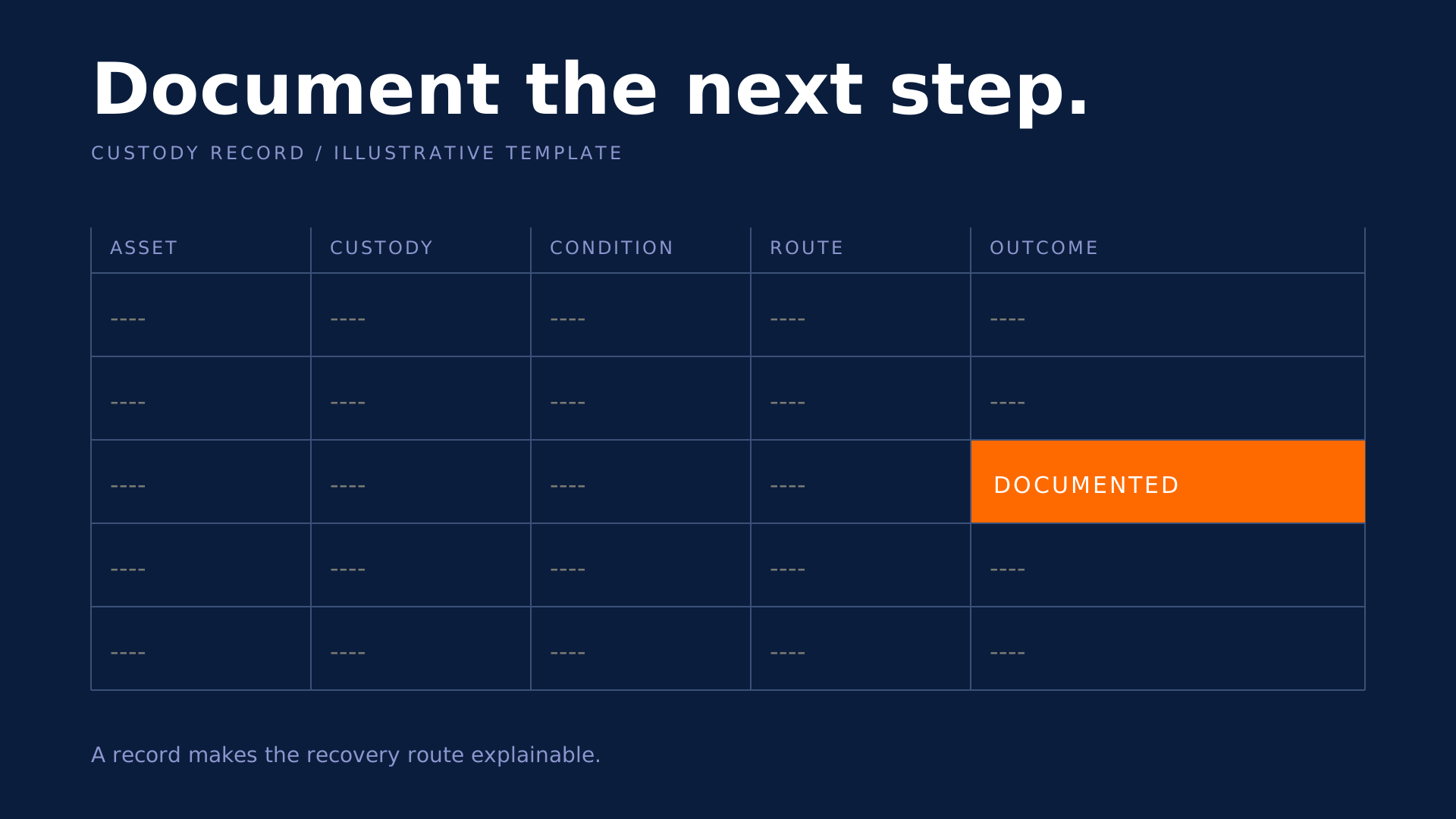
The intake record and Chain-of-Custody Record connect device receipt to the agreed recovery workflow.
Every processed data-bearing device receives a Certificate of Data Destruction recording the completed data outcome.
Each processed data-bearing device is included with its erasure result against the submitted inventory.
Condition, grading, recovery readiness, final routes, and approved exceptions are recorded where those activities are in scope.
A failed wipe, unexpected condition, missing component, or other issue is documented with its approved next step.
For recovery-value projects, the final settlement explains each difference between the written quote and audited result line by line.
Thread → Trace → Next Step
Quote, manifest, Chain-of-Custody Record, Certificate of Data Destruction, Serialized Erasure Report, Recovery and Exception Report, Exception Register, settlement, and payment can be reconciled against the same project thread.
Practical details
The Chain-of-Custody Record and Exception Register develop through the workflow. The Certificate of Data Destruction, Serialized Erasure Report, Recovery and Exception Report, and settlement records follow the relevant completed activities.
Quantity requirements depend on the locations, logistics, device mix, requested work, and records. The assessment confirms the practical scope.
A complete list improves reconciliation, but Galide can begin with the available inventory and identify the fields needed for the final reporting package.
The Exception Register identifies the device, issue, current status, authorized reviewer, and approved next outcome under the project’s agreed route.